
Research on the mental health of journalists
The Mental Support for Media (MSM) psychological support program for journalists and newsrooms was launched in early 2023. It is the result of four years of work by the Souspilnist Foundation team, in partnership with the BrainCult Mental Health Center, to expand access to psychological support for media outlets and journalists.
The primary goal of the Mental Support for Media program is to make the culture of caring for journalists' mental health a norm in daily life and work. The program is based on a comprehensive support model for newsrooms that we developed, which includes four components: diagnostics, training, individual consultations, and recovery activities for journalists.
We are now able to share with you the results of the diagnostics of journalists' psychological states conducted between September 2023 and April 2024. The sample size consisted of 327 journalists.
The assessment was conducted based on the results of screening questionnaires for symptoms of depression (PHQ-9), anxiety disorder (GAD-7), and an emotional burnout test.
Burnout:
92.4% of journalists who participated in the study have symptoms of burnout . At the same time, the majority (62.4%) have only its initial signs, which are generally quite easy to correct. Burnout of moderate severity and pronounced level have 28.1% and 1.8%, respectively.

Symptoms of depression:
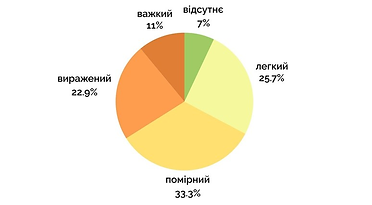
93% of the surveyed journalists have symptoms of depression . Of these, a quarter have mild symptoms – 25.7%; moderate – 33.3%. Symptoms of severe and severe depression are experienced by 22.9% and 11%, respectively.
Symptoms of anxiety disorder (GAD):
Symptoms of anxiety disorder are present in everyone to one degree or another: mild – in 10.7% of respondents, moderate – in 38.2%, medium – in 30% and 21.1% of respondents have symptoms of high anxiety.

Out of 327 respondents, 191 individuals have experienced stressful events. Among them, 117 (61%) report that memories of these events continue to trouble them, repeating in a distressing and unwanted manner.
At the same time, it is vital to understand that during wartime, people may experience a wide range and intensity of emotional and physiological reactions—and this is a normal response to acts of violence. These reactions can be unpleasant, difficult to control, and challenging, thus requiring attention; however, they are usually the result of the human body operating in self-defense mode and are not, in themselves, pathological.
Nevertheless, this does not mean that such states should be ignored or left unaddressed. They significantly impact both work capacity and quality of life in general. Seeking access to psychotherapeutic support for team members is unequivocally appropriate.
Below are some of the responses from survey participants that are particularly important to note and for which solutions must be found to improve the situation.
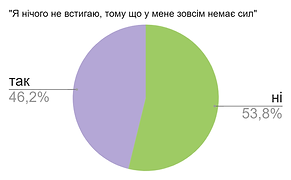


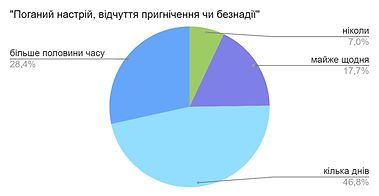


Alongside this, there are accessible ways to improve the well-being of journalists. Some of these can be implemented on a personal level and depend solely on the journalist themselves, some on a team level, and others concern the workflow and fall within the responsibility of newsroom management.
We will soon share with you the results of a study on the effectiveness of even short-term psychotherapeutic support (2–4 months) for journalists within the Mental Support for Media (MSM) program.
Summary:
The profession of a journalist is exceptionally important—in peacetime, and especially during war. But behind the profession stands a person who is no less important and who sometimes needs support. The results of the diagnostic assessment of journalists' psychological states are as follows:
-
Number of respondents: 327 media professionals;
-
Period: September 2023 – April 2024;
-
Assessment method: Screening questionnaires for symptoms of depression (PHQ-9), anxiety disorder (GAD-7), and an emotional burnout test.
According to the study:
-
Symptoms of burnout are present in 92.4% of journalists; however, the majority (62.4%) exhibit an initial level that can be corrected quite effectively if addressed through specific changes in the organization of the work process.
-
Symptoms of depression are present in 93% of respondents. Among them, one-third exhibit symptoms of moderately severe and severe depression (22.9% and 11%, respectively).
-
Symptoms of anxiety disorder are present in all respondents to some degree, but significantly, nearly half of those surveyed exhibit symptoms of moderate and severe anxiety—at 30% and 21.1%, respectively.
While it is normal to experience such states during wartime, this does not mean they should be ignored or left unaddressed. They significantly impact both work capacity and life in general. Seeking access to psychotherapeutic support for team members is unequivocally appropriate.
The study was prepared by:
-
Anastasiia Nizhnik, psychotherapist, co-founder of the BrainCult Center for Development and Psychotherapy and the Resilience Hub platform.
-
Andrii Sydorenko, coordinator of the Mental Support for Media program at the Souspilnist Foundation.